

Easy (sightseeing & cultural circuit)
Himachal Circuit — Shimla, Kasol, Manali & Amritsar
Starts Mumbai/Pune/Nashik (train) — land circuit begins Chandigarh
- From
- Rs. 18,499*
- Nights
- 10
- Open dates
- 14
Field guide · Himachal Pradesh
A small riverside village in the Parvati valley that became the backpacker base for the walks and hill villages around it.
Photo: The Parvati river running over boulders through pine forest near Kasol
Kasol is tiny. Wikipedia puts the hamlet at about a third of a square kilometre, strung along one road beside the Parvati River at around 1,580 m. What made it famous is what it is near: pine forest, hot springs at Manikaran, and a ring of villages you can only reach on foot.
It picked up the nickname "Mini Israel" from the Israeli travellers who have been staying long here for years, and the menus show it. Treat Kasol as a place to sleep, eat and start walking.
Overview
The Parvati is a fast, cold, grey-green river that joins the Beas at Bhuntar. The road follows it up through Jari to Kasol, on to Manikaran, and ends at Barshaini, where the trails to Tosh, Kalga, Pulga and Kheerganga begin.
Kasol has an old side and a new side, split by a bridge over a side stream. The main street is cafes, bakeries, guesthouses and shops selling woollens and hemp bags. Step off it towards the river and you are in pine forest within minutes.
In May, June and on long weekends Kasol is busy and the road jams. On a weekday in March or October it is quiet. The village is the least interesting part of the valley, so plan to walk out of it.
The river kills people every year. Banks are slippery and the current is far stronger than it looks, so stay off the rocks, especially after dark. Tell your guesthouse where you are going before any walk, and keep to known trails. Cannabis is illegal in India whatever you are told in the valley.

Things to do
Cross the suspension bridge and follow the forest path along the far bank. An easy, level walk to a quiet village with a few cafes. Carry a torch if you will return after dark.
Hot springs that run at 64 to 80 degrees C, sacred to Sikhs and Hindus alike. The gurdwara cooks rice and dal for its free kitchen in the spring water. There is a Ram temple beside it and bathing pools for men and women. Cover your head in the gurdwara.
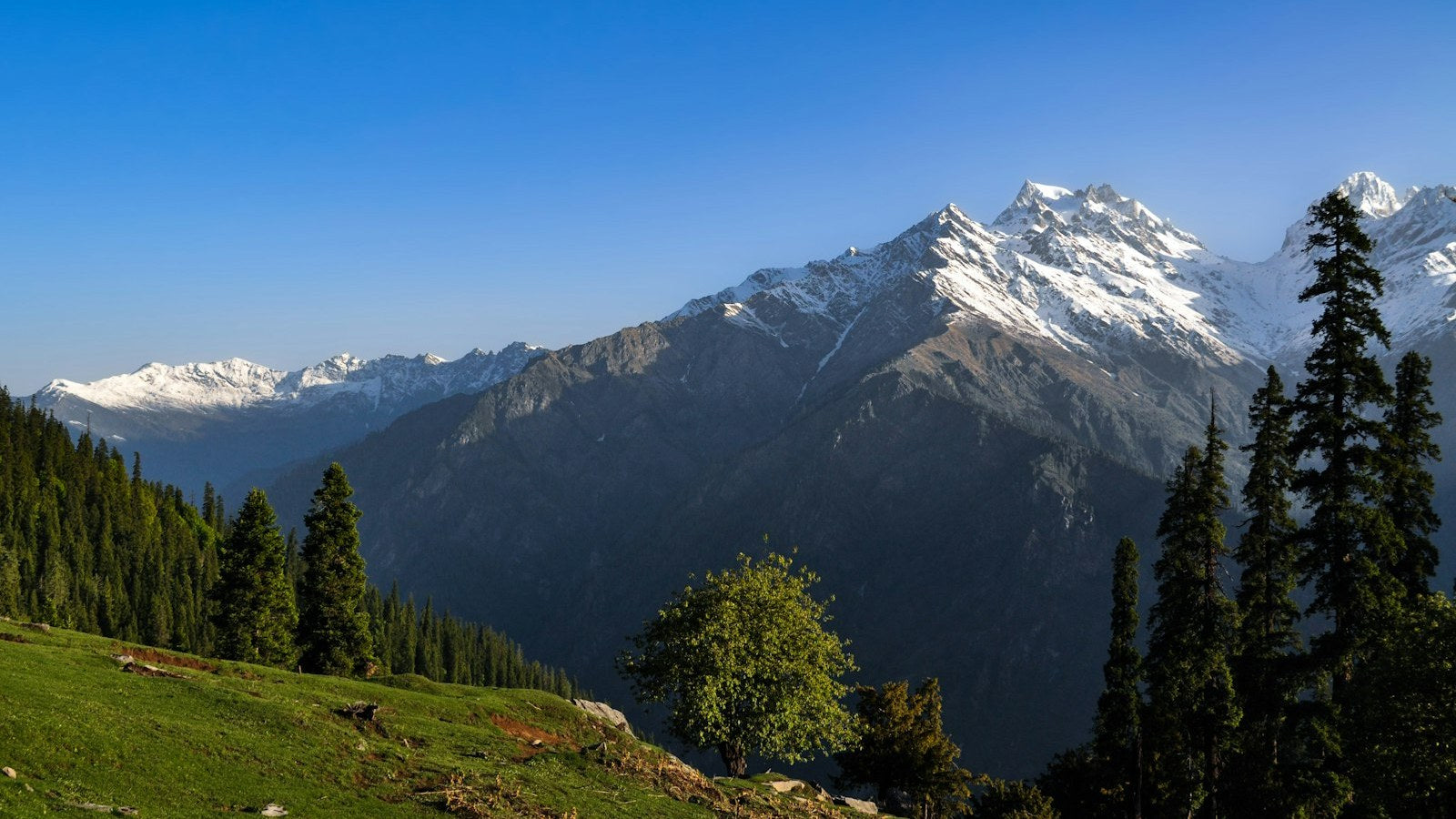
A village at the end of a side valley, with wooden houses, guesthouses and a view up to snow peaks. A taxi can get most of the way, and the last stretch is on foot.
Three villages on the opposite slope, set among apple orchards and a stand of old forest that travellers call the fairy forest. They can be linked in one easy hike.
A steady climb through forest from Kasol to a traditional village with no road. A good first proper hike. Take a guide if you are unsure of the path, and stay the night if you can.
A trek to a meadow with a hot spring at about 2,900 m. It is the valley's best-known hike, and it is busy in season. Camping rules there have changed more than once, so check before you plan to sleep on top.
Practical info
March to June, mid September to November
Spring and autumn are best for walking. December to February brings snow and real cold. Avoid July and August: the monsoon makes the road and trails prone to landslides, and the river runs high.
Via Bhuntar
Overnight buses from Delhi and Chandigarh towards Manali stop at Bhuntar. From there Kasol is about 30 km, by local bus or taxi. Bhuntar also has the valley's small airport, with limited flights.
Low
Kasol is at about 1,580 m and Manikaran at 1,760 m. Altitude is not an issue here. Kheerganga, near 2,900 m, is where you might notice it.
Patchy
Jio and Airtel are reported to work best in Kasol itself. Expect weak or no signal in Tosh, Kalga and on trails. Many guesthouses take cash only.
For the trails
Shoes with grip, a rain layer, a warm layer for evenings, a torch, and a refillable bottle. Carry your rubbish back down. The upper valley has no way to deal with it.
Build your packing list
Tell the builder where and when you are going and it gives you a list you can tick off.
Open the Packing List BuilderGo with Charkadam
Kasol is on both of our Himachal circuits. Each trip page has the current day-by-day plan, so you can see how much time each one gives the Parvati valley.
* Indicative starting price. The trip page shows the price for each date.
Easy (sightseeing & cultural circuit)
Starts Mumbai/Pune/Nashik (train) — land circuit begins Chandigarh
Questions
Kasol is known as a backpacker base in the Parvati valley, for its riverside setting, Israeli food, and walks to villages such as Chalal, Tosh, Kalga and Grahan. Manikaran's hot springs are about 4 km away.
Two nights covers Chalal and Manikaran. Add one or two more for Tosh, Kalga and Pulga or the Grahan hike.
Most visits are trouble-free. The real risks are the river and unfamiliar trails. Stay off riverbanks after dark, tell your guesthouse your plans, and keep to known paths.
March to June and mid September to November. July and August bring heavy rain and landslides, and December to February is cold with snow.
Keep reading
 Beas valley base
Manali
Old Manali, Hadimba's cedar forest, Solang's snow and the tunnel to Lahaul.
Beas valley base
Manali
Old Manali, Hadimba's cedar forest, Solang's snow and the tunnel to Lahaul.
 The old summer capital
Shimla
The Ridge, the toy train, Himachali food and the forest walks behind the crowds.
The old summer capital
Shimla
The Ridge, the toy train, Himachali food and the forest walks behind the crowds.
 Paragliding and monasteries
Bir Billing
The launch at Billing, the Tibetan colony below, and slow village walks.
Paragliding and monasteries
Bir Billing
The launch at Billing, the Tibetan colony below, and slow village walks.
 Little Lhasa
Dharamshala and McLeod Ganj
The Dalai Lama's temple, Tibetan kitchens, and the walk up to Triund.
Little Lhasa
Dharamshala and McLeod Ganj
The Dalai Lama's temple, Tibetan kitchens, and the walk up to Triund.
