


- From
- Rs. 24,999*
- Nights
- 6
- Open dates
- 6
Field guide · Meghalaya
Dawki and Shnongpdeng travel guide
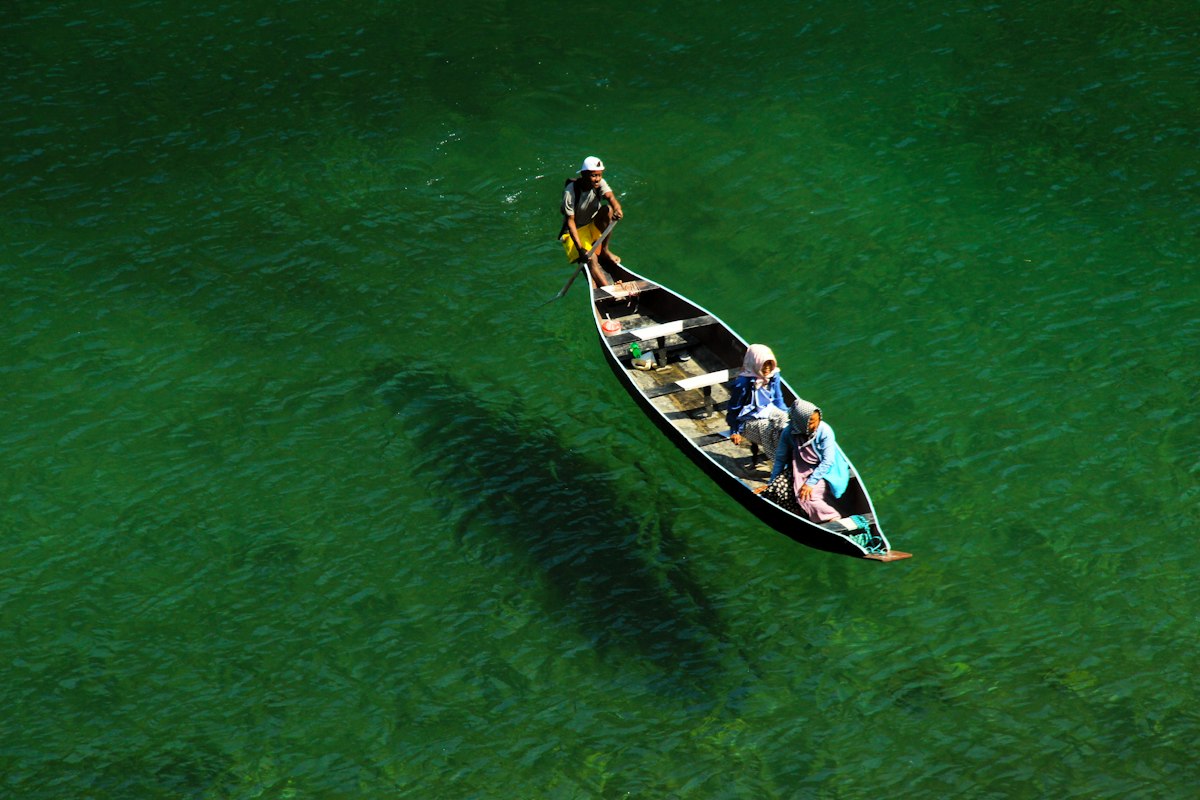
The Umngot river on the Bangladesh border: in the dry months, water so clear that boats seem to float on air. In the wet months, not at all.
- November to FebruaryClearest water
- About 2.5 to 3 hoursFrom Shillong
- A day, or one night campingGood for
Photo: A wooden boat with three people on the clear green Umngot river at Dawki, its shadow visible on the riverbed
Dawki is a small border town in the Jaintia Hills where the Umngot river leaves the hills for the plains of Bangladesh. Shnongpdeng is a village a few kilometres upstream on the same river. Between them they have produced some of the most shared photographs in India: a wooden boat, its shadow on the riverbed, and nothing visible in between.
Those photographs are real, and seasonal. This guide is mostly about getting the timing right.
Overview
One river, two villages
Dawki is on the highway. There is a suspension bridge the British built in 1932, a line of boats below it, and trucks queuing for the border post with Bangladesh at Tamabil. It is where day-trippers from Shillong stop, take a boat ride and leave.
Shnongpdeng is upstream, down a side road. Sources put it 8 to 15 km from Dawki. It has riverside camps and homestays, a footbridge, and the same water with fewer people. This is where you swim, kayak and stay the night.
Why the water is clear, and when
In the dry season the Umngot runs slow over a bed of pale stones and carries almost no silt. Rain upstream turns it brown within hours. Guides agree on October to April as the season, with November to February the clearest.
A caution about recent years
In November 2025 Meghalaya's pollution board reportedly linked murky water at Dawki to soil and debris from highway works on the Shillong road. Clarity can no longer be taken for granted even in winter. Ask someone who was there this week.

Things to do
On and in the water
-
A boat on the Umngot
A boatman rows you up the gorge and back. Recent guides quote roughly Rs 500 to 800 per boat, for up to four or more people, depending on season. Go before 10 am for still water and light that reaches the riverbed.

Dry-season water at Dawki -
Kayak, snorkel, cliff jump
The state tourism site lists boating, kayaking, cliff jumping, snorkelling and scuba in this stretch, and gives opening hours of 6 am to 6 pm. Wear the lifejacket. The river is deep and colder than it looks.
-
Camp on the riverbank
Tents on the sand beside the river, with dinner and a fire. Operators advertise tents from a few hundred rupees a person, and around Rs 1,000 with meals. It is basic: shared toilets, thin mats.
-
Cross the footbridge
A suspension bridge over the river gives the view straight down into the water. A path on the far side goes into the forest.

Shnongpdeng footbridge -
The border viewpoint
You can stand near the check post and look across at Bangladesh, a few hundred metres away. You cannot cross without a passport and visa. Ask the border guards before taking photographs, and carry ID.
-
Mawlynnong and its root bridge
Usually combined with Dawki on the same day. The village has a bamboo viewing tower and, at nearby Riwai, a single living root bridge reached by a short walk.

Near Mawlynnong
Practical info
Before you go
Best time
November to February
October to April is the season. November to February gives the clearest water and cool days. From May the river starts to cloud, and from June to September it is brown, high and fast, and boating may stop.
Getting there
From Shillong
About 80 to 90 km from Shillong, two and a half to three hours on a winding road. Shared taxis run from Shillong to Dawki. For Shnongpdeng you need your own vehicle or a local taxi from Dawki.
ID and the border
Carry it
This is an international border. Carry government photo ID, follow instructions from border guards, and do not wade or boat across the marked line in the river.
Water safety
It is a real river
Wear the lifejacket even if you swim well. Do not jump from rocks unless a local guide says the spot is deep enough today. Do not swim after drinking.
What to pack
For a wet day
Swimwear, a quick-dry towel, a change of clothes, sandals with straps, a dry bag, sunscreen, a hat, and cash in small notes. There is no ATM at the river.
Build your packing list
You will get wet. Tell the builder the month and it sorts the rest.
Open the Packing List BuilderGo with Charkadam
Dawki, with a group
The Umngot river is on both of our Meghalaya trips. The trip pages have the day-by-day plans and say where the group stays.
* Indicative starting price. The trip page shows the price for each date.
- From
- Rs. 27,999*
- Nights
- 10
- Open dates
- 6
Questions
Dawki, answered
November to February is the clearest. The wider season is October to April. In the monsoon, from June to September, the river is muddy.
Dawki is on the highway and suits a short boat ride. Shnongpdeng, a few kilometres upstream, is quieter and better for swimming, kayaking and camping.
About 80 to 90 km, which takes two and a half to three hours by road.
Recent guides quote roughly Rs 500 to 800 per boat, not per person, depending on the season. Confirm the price before you get in.
Keep reading
Guides nearby
-
 The whole state
Meghalaya
Root bridges, caves, waterfalls, Khasi food and how the seasons change all of it.
The whole state
Meghalaya
Root bridges, caves, waterfalls, Khasi food and how the seasons change all of it.
-
Falls, caves, root bridges
Cherrapunji (Sohra)
Nohkalikai, the steps to Nongriat, and the caves under the plateau.
-
 The hill capital
Shillong
Markets, museums, music, and Khasi food stalls on every corner.
The hill capital
Shillong
Markets, museums, music, and Khasi food stalls on every corner.
-
 Monastery town near the border
Tawang
India's largest monastery, high lakes, Monpa food, and the permits you need.
Monastery town near the border
Tawang
India's largest monastery, high lakes, Monpa food, and the permits you need.


